What is the role of automation in printed circuit boards manufacturers?
role of automation in printed circuit boards manufacturers
Automation plays a crucial role in the operations of printed circuit boards manufacturers, transforming the way these companies design, produce, and assemble PCBs. As the demand for more complex and high-performance electronic devices continues to rise, the role of automation in PCB manufacturing has become increasingly important. By implementing automated systems, manufacturers can significantly improve efficiency, accuracy, and scalability, all while reducing human error and operational costs.
One of the key ways automation impacts printed circuit boards manufacturers is through the improvement of production speed. Automated systems can handle repetitive tasks much faster than manual labor, such as component placement, soldering, and inspection. These systems are designed to work continuously, without the need for breaks, which increases production output. This is especially important as the demand for PCBs continues to grow in industries like consumer electronics, automotive, and telecommunications. Automation allows manufacturers to meet these increasing demands without compromising on quality or efficiency.
Automation also plays a vital role in improving the precision and consistency of the manufacturing process. In PCB production, even the smallest errors in component placement or soldering can lead to defective boards that could fail during operation. Automated systems, such as pick-and-place machines, are capable of placing components with pinpoint accuracy, ensuring that each PCB meets the strict requirements for performance and reliability. These systems are also able to perform tasks like optical inspection and testing, which helps catch defects early in the production process, reducing the risk of faulty products reaching the market.
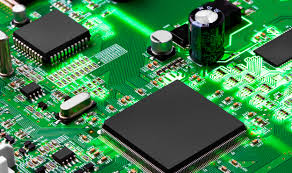
What is the role of automation in printed circuit boards manufacturers?
In addition to improving speed and precision, automation in printed circuit boards manufacturers helps optimize workflow and reduce waste. Automated systems can handle material handling, inventory management, and assembly line coordination with greater efficiency than manual labor. This helps ensure that components are available when needed, and the production process flows smoothly. By reducing bottlenecks and minimizing human intervention, automation can help lower operational costs and increase profitability. Furthermore, automation aids in reducing material waste by ensuring that components are used efficiently and that defective boards are detected and discarded early in the process.
Another significant advantage of automation in PCB manufacturing is its ability to enhance scalability. As demand for PCBs fluctuates, automated systems allow manufacturers to scale production up or down quickly without the need for significant workforce adjustments. This flexibility is especially important in industries where product lifecycles are short, and time-to-market is critical. Automation helps manufacturers remain agile, enabling them to respond to market changes and customer requirements more effectively.
Moreover, automation has a positive impact on the overall quality control process within printed circuit boards manufacturers. Automated inspection systems, such as automated optical inspection (AOI) and X-ray inspection, ensure that every PCB is thoroughly tested for defects. These systems are capable of detecting minute defects, such as solder joint issues or misalignments, that may not be easily identified by the human eye. By catching these issues early, manufacturers can ensure that only the highest-quality PCBs are shipped to customers.
In conclusion, automation is transforming the way printed circuit boards manufacturers operate, offering numerous benefits in terms of efficiency, accuracy, cost savings, and scalability. By embracing automation, manufacturers can streamline production processes, reduce errors, and meet the growing demands of the electronics industry. The integration of automated systems not only enhances the quality and reliability of PCBs but also ensures that manufacturers remain competitive in a fast-paced and ever-evolving market.















































Post Comment