Are there any standards for printed circuit board manufacturers manufacturing?
printed circuit board manufacturers manufacturing
Printed Circuit Boards (PCBs) serve as the backbone of modern electronics, enabling the seamless integration of electronic components in a variety of devices. To ensure the quality, reliability, and interoperability of PCBs, industry standards play a crucial role in guiding manufacturers in their manufacturing processes. Let’s explore some of the key standards that govern PCB manufacturing.
The Institute for Printed Circuits (IPC) is a global trade association that sets industry standards for the design, manufacture, and assembly of PCBs and electronic assemblies. IPC standards cover a wide range of topics, including design guidelines, materials specifications, fabrication processes, assembly techniques, and reliability testing. Examples of IPC standards relevant to printed circuit board manufacturers include IPC-A-600 for acceptability of printed boards, IPC-6012 for qualification and performance of rigid printed boards, and IPC-6013 for qualification and performance of flexible printed boards.
The International Organization for Standardization (ISO) develops and publishes international standards for various industries, including electronics manufacturing. ISO standards provide guidelines and requirements for quality management systems, environmental management systems, and product certification. ISO 9001, for example, is a quality management standard that outlines the requirements for organizations to demonstrate their ability to consistently provide products and services that meet customer and regulatory requirements. ISO 14001 is an environmental management standard that addresses the organization’s environmental responsibilities and commitments.
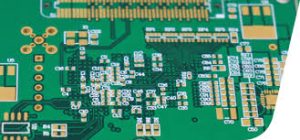
Are there any standards for printed circuit board manufacturers manufacturing?
Underwriters Laboratories (UL) is a global safety certification organization that provides testing, inspection, and certification services for a wide range of products, including PCBs and electronic assemblies. UL certification ensures that the products meet safety, performance, and reliability requirements based on applicable standards and regulations. UL 796 is a standard for printed wiring boards that covers materials, design, construction, and performance requirements for single-sided, double-sided, and multilayer PCBs.
The Restriction of Hazardous Substances (RoHS) Directive is a European Union regulation that restricts the use of certain hazardous substances in electrical and electronic equipment. RoHS compliance requires PCB manufacturers to ensure that their products are free from restricted substances, such as lead, mercury, cadmium, and hexavalent chromium. Compliance with RoHS is typically indicated by a RoHS compliance mark or declaration of conformity.
The Registration, Evaluation, Authorisation and Restriction of Chemicals (REACH) Regulation is a European Union regulation that addresses the production and use of chemical substances and their potential impact on human health and the environment. PCB manufacturers must comply with REACH requirements by registering substances used in their manufacturing processes, providing safety data sheets, and communicating information about hazardous substances in their products.
Military standards are developed by the United States Department of Defense (DoD) to establish uniform engineering and technical criteria for military-unique products and processes. MIL-PRF-55110, for example, is a performance specification for rigid printed wiring boards used in electronic equipment for military applications. MIL-PRF-31032 is a performance specification for high-density interconnect (HDI) printed wiring boards used in military and aerospace applications.















































Post Comment